The Ghosts of Oviken Church and a Dark Event from the 19th Century
Jämtland · Sweden · Church
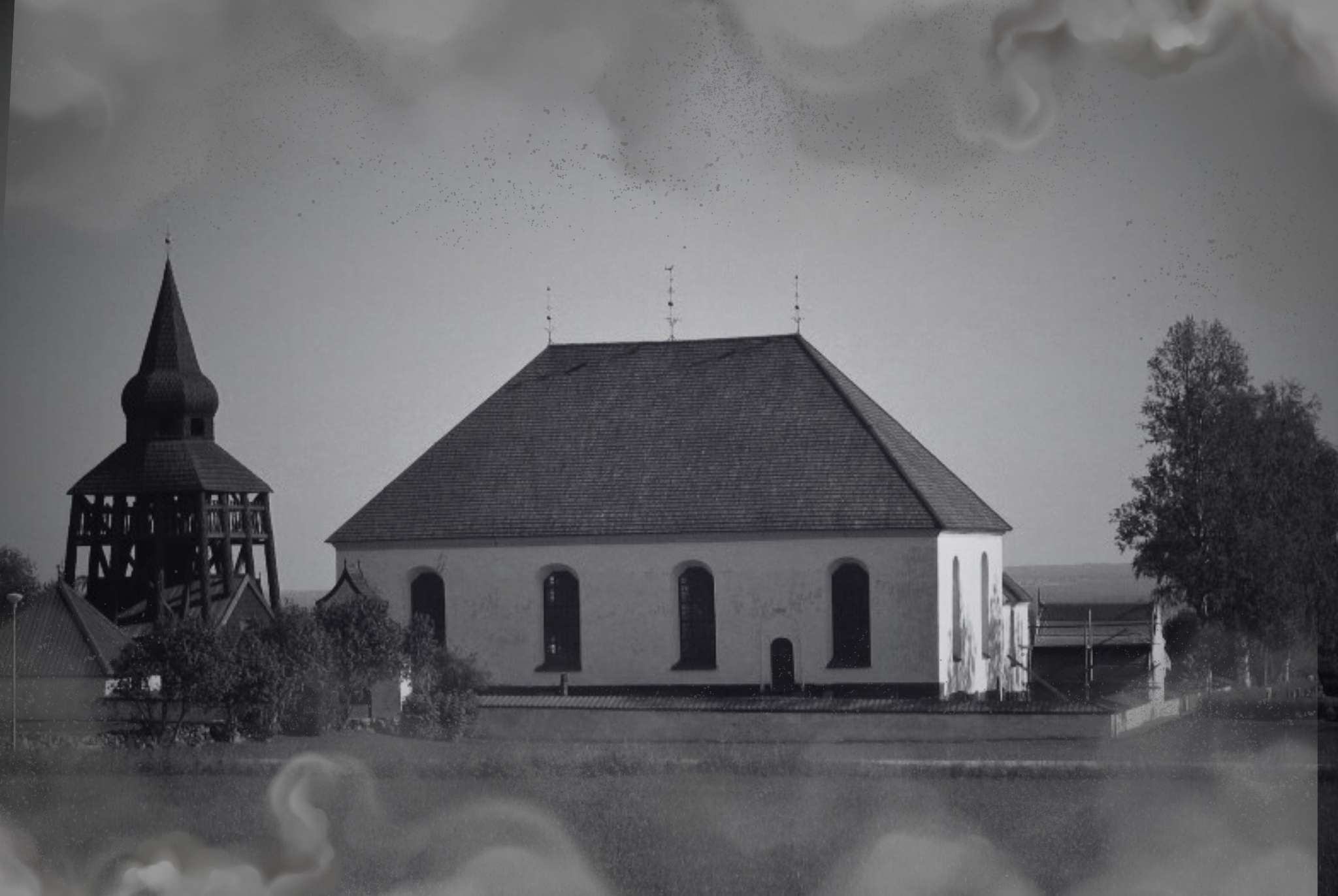
Oviken's old church is a historic site with deep roots in Jämtland's spiritual and cultural history. But among the old walls and graves, more than just the church's documented history lives on
Oviken old church — ghosts and a dark event from the 1800s
Oviken old church is a historic site with deep roots in the spiritual and cultural history of Jämtland. But among the old walls and graves it is not only the church's documented history that lives on — accounts of the supernatural make the place something more than a sight to visit. One particular story from the 1890s stands out, concerning a man said to have carried the body of a child to the church's mortuary.
The mysterious man with the child
A woman, then 75 years old, recounted in 1955 an event she had witnessed as a catechism pupil in the 1890s. She and other children saw an old man with a long white beard, a black hat and a long overcoat walking towards the church. Under his arm he carried something that on closer look proved to be a wrapped child's body, surrounded only by a few simple laths and a sack from which the hair protruded.
The man went up to the mortuary, unlocked the door and went in. The children considered following but arrived only in time to see him come out again, lock the door and walk back the way he had come. Who he was, or why he carried a child to the church, is a mystery no one could explain. There was no known burial at that time, and the man never went through the church caretaker to obtain the key.
"Perhaps he was someone who could not rest and came to hide what he had done," the woman suggested later. The story, with its dark undertones, lives on as part of the church's rich body of legend.
Historical significance and architecture
Oviken old church, with roots in the Middle Ages, was once among the most important religious centres in Jämtland. Its significance reached well beyond the province, as shown by the fact that its parish priest, Erik Andersson, was engaged by Gustav Vasa to lead the Reformation in the region.
The present building dates largely from 1503, when the church was reconsecrated by Archbishop Jakob Ulvsson after a major rebuilding. During the 1700s the church underwent another extensive renovation, and the bell tower was built by Jonas Granberg. A churchyard wall from the same period runs around the grounds, with three well-preserved lychgates and original wooden gates.
In the 1930s a restoration was carried out thanks to generous donations. The church was reconsecrated in 1935 and remains a place for both spiritual contemplation and historical interest.
The church's furnishings
Among its treasures are a pulpit from 1760, decorated with an hourglass and a skull, and an altarpiece on the theme of the Trinity, created by Jonas Granberg. Another remarkable object is the copy of a Flemish altar cabinet once sold from the church during the Reformation. The copy, made by Peder Olofsson in the 1650s, was returned to Oviken and now adorns the interior.
Strange experiences
Beyond the story of the man with the child, local legends tell of other unexplained phenomena at the church and its surroundings. Visitors have sometimes reported a sense of being watched, or heard sounds they could not account for.
The old church building and its setting, including the medieval churchyard wall, radiate a timelessness that makes it easy to understand why the place inspires both reverence and fascination.
FAQ
Where is The Ghosts of Oviken Church and a Dark Event from the 19th Century located?
The Ghosts of Oviken Church and a Dark Event from the 19th Century is in Jämtland, Sweden.
More haunted places in Jämtland
- Borgvattnet Rectory Jämtland · Rectory
- Ghosts at the Closed Care Home in Hammarstrand Jämtland · Haunted house
- Bispgården Jämtland
- Hoverberget Jämtland · Natural site
- The Frösö Runestone Jämtland · Stone formation
- Äspnäs Jämtland · Natural site
- Rödöns avrättningsplats Jämtland · Execution site
- Avrättningsplats – Berg Jämtland · Execution site
Accounts are drawn from local folklore and visitor reports.