Örebro slott
Örebro · Sverige · Castle
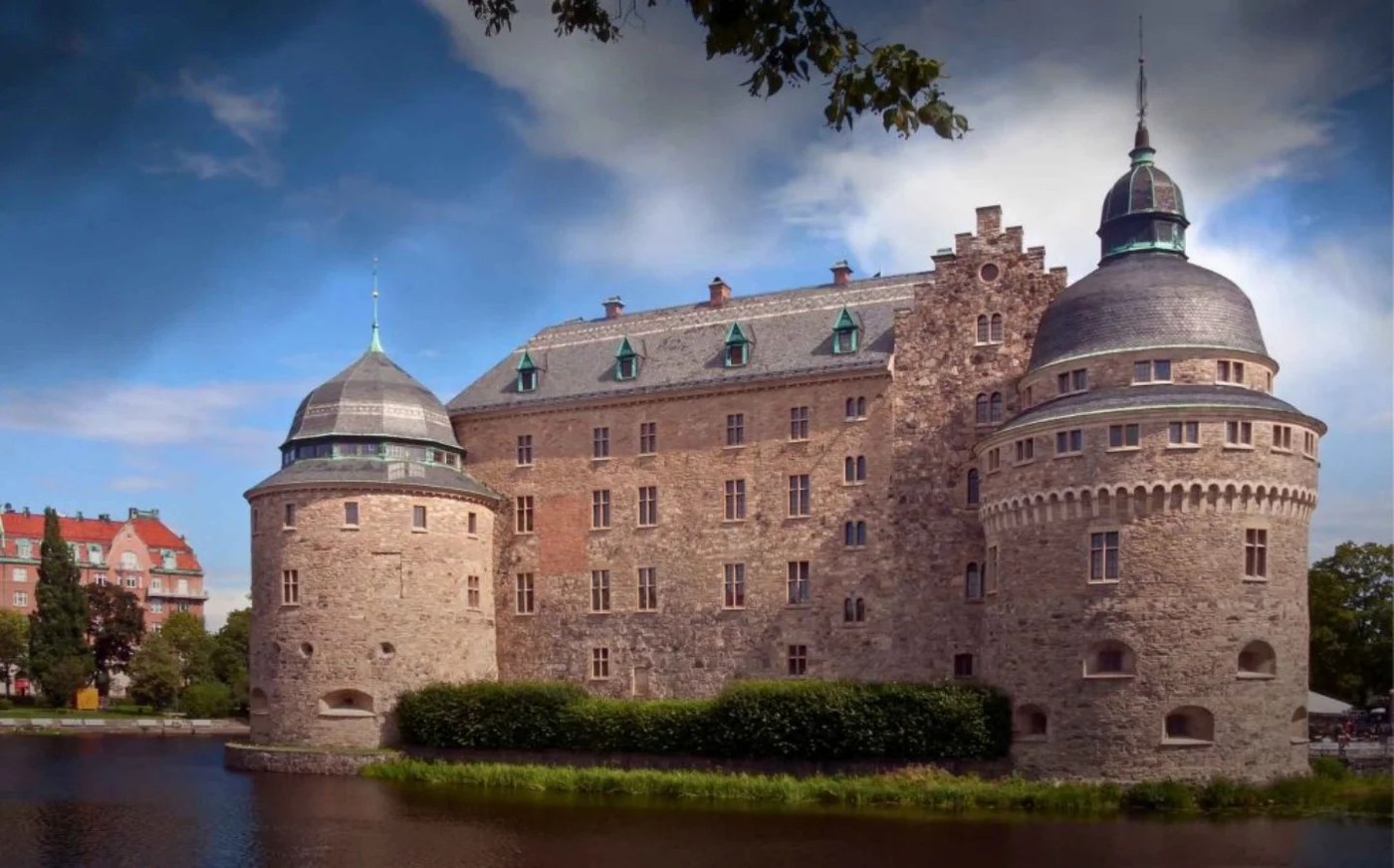
Midt i Örebro, på en liten holme omgitt av Svartåns vann, står Örebro slott. Den mektige bygningen har aner fra 1300-tallet og er et levende museum over svensk historie.
Örebro Castle — the ghosts of a thousand-year crossroads
In the middle of Örebro, on a small island surrounded by the waters of the Svartån river, stands Örebro Castle. The imposing building has roots in the 1300s and works as a living museum of Swedish history. But parliaments, royal visits and major rebuildings are not the only things that left their mark here. The castle is also known as a place where the supernatural is said to have a particular presence.
Through the centuries Örebro Castle has been a defensive work and a residence, a prison and a seat of government. Its many roles have left behind a rich heritage — and a series of ghost stories that draw sceptics and believers alike.
From fortress to Renaissance castle
The castle began as a simple medieval fortress, probably raised by King Magnus Eriksson in the 1300s to protect important trade routes. Originally it was a robust stone building surrounded by a moat. At the end of the 1500s the fortress was rebuilt into a Renaissance castle under Duke Karl, later Karl IX. Taking inspiration from French châteaux, the result was an imposing square complex with corner towers and whitewashed façades.
During the 1600s the castle lost its strategic importance and was used instead for parliaments and other state purposes. It fell into decay in the 1700s but was given new life in the 1800s through a romantic-historicist renovation that gave it much of its present appearance.
Kings, prisoners and political drama
Örebro Castle has been the setting for several historically significant events. Gustav Vasa held important meetings here during the Reformation, including the famous church assembly of 1529 when clerical celibacy was abolished in Sweden. The parliament of 1810, at which Jean Baptiste Bernadotte was elected heir to the Swedish throne, is another landmark.
The castle has also served as a prison. Among its inmates were the famous thief Lasse-Maja and Baron Georg Heinrich von Görtz, adviser to Karl XII. It is rumoured that some of these souls never quite left the walls.
Engelbrekt — the regent who never found rest
Engelbrekt Engelbrektsson, one of Sweden's best-known medieval leaders, took possession of Örebro fortress during his revolt against the union king Erik of Pomerania. Two years after Engelbrekt's murder at Göksholm in 1436, his remains are said to have been moved to Örebro Castle. According to legend, Karl IX had his body walled into the castle's masonry to prevent pilgrims from travelling to his grave.
Engelbrekt's spirit is said to still walk the castle. Visitors have reported seeing a small man, sometimes carrying his own head under his arm, moving through the stairwells and dark corridors.
The grey woman in the attic
One of the castle's best-known ghost stories concerns a woman said to haunt the attic. The account spread widely in 1993 when a site manager, alone in the attic late one evening, experienced something strange. He felt watched and saw a young woman approaching. Suddenly she began to age: as the seconds passed her face turned grey and deeply lined. The manager fled in panic and refused to return to the attic alone.
Mischievous spirits in the church hall
Not all the phenomena at Örebro Castle are frightening — some are simply puzzling. In the Kyrksalen, the castle's church hall, windows have opened and closed by themselves, and keyrings in the castle shop have started swinging with no visible cause. During a children's party the attic door suddenly locked, although the large wrought-iron key lay safely in reception. Whether the castle has a mischievous ghost that enjoys playing with visitors remains unclear.
Harald Pletting and his tragic fate
One of the castle's darkest accounts concerns the squire Harald Pletting. In 1499 he was hanged without trial, accused of treason. His soul is said never to have left. In the 1980s an employee saw his body hanging from a chain by the castle's winch, with two men holding drawn swords standing behind him. The episode repeated itself a few years later, strengthening the belief that Harald still haunts the castle.
The castle today
Örebro Castle is open to the public and offers guided tours covering its history and its many ghost stories. The great hall and the armoury are used for exhibitions and events, while the church hall and the Engelbrekt room are popular for private functions.
Special ghost walks are arranged in autumn, where visitors hear about the castle's best-known hauntings and may experience something themselves. Many describe feeling cold draughts or hearing whispers in rooms that stood empty.
FAQ
Hvor ligger Örebro slott?
Örebro slott ligger i Örebro, Sverige.
Opplysningene bygger på lokal folketro og vitneskildringer.
Image: Svenska Spökkartan (Facebook)