Svanö vandrarhem
Västernorrland · Sweden · Hotel
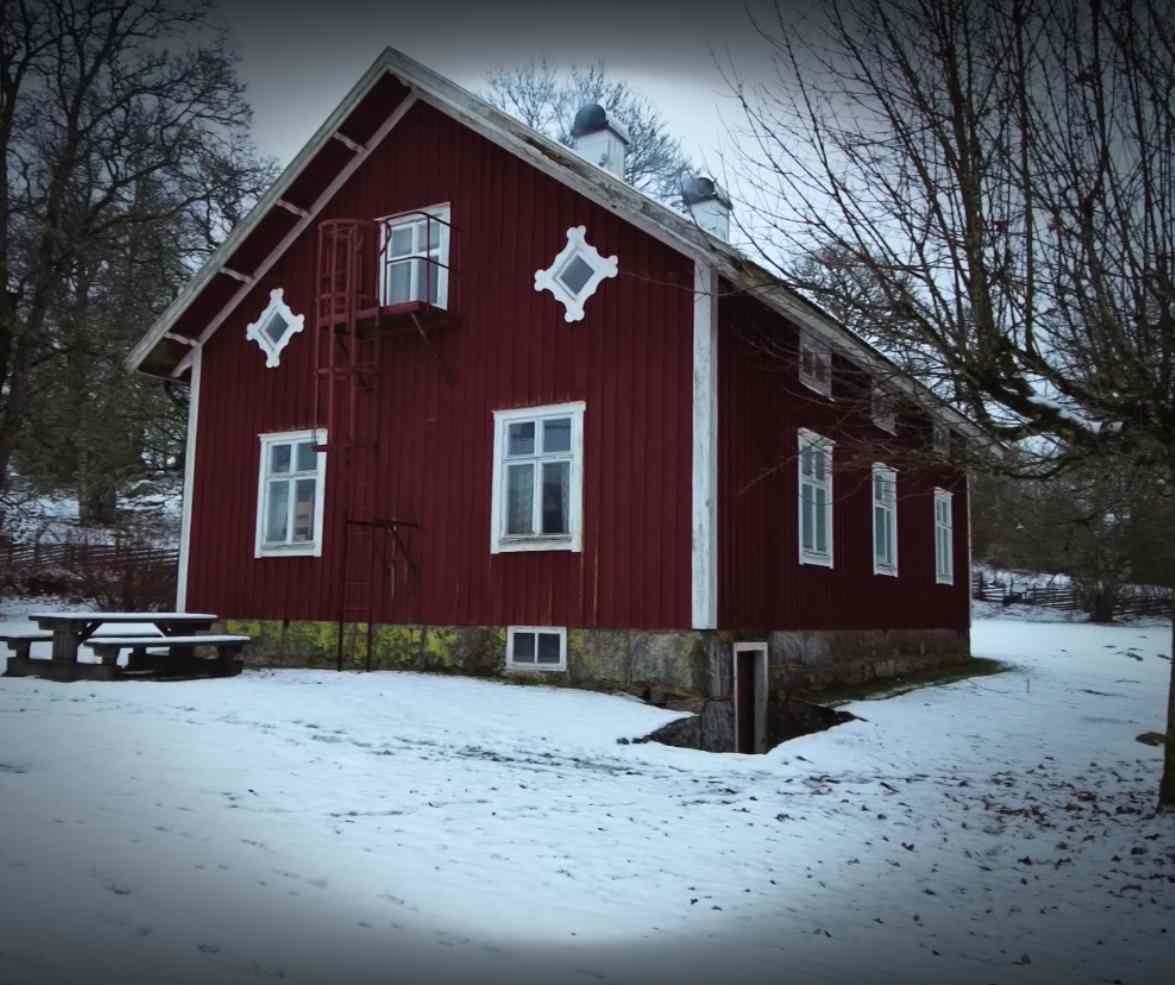
Deep inside the still expanse of Store Mosse national park stands a house that carries more than one history.
Svänö hostel — a house that keeps its own time
Deep inside the quiet expanse of Store Mosse national park stands Svänö hostel, a house carrying both cultural history and stories that have followed generations. The old farmstead, dating from 1907, has become a place where time feels more present than past. Here, in one of the park's most remote settings, the silence of nature meets the memories of people who have lived and worked on the site since the 1600s.
For some, Svänö is above all a place for calm and for experiencing nature. For others it is a place that raises questions rather than answering them. Two ghost-hunting investigations by a local team have reinforced that impression — not through dramatic events, but through quiet, recurring experiences that were difficult to dismiss.
The first investigation
When the team first came to Svänö, the focus was one of the site's best-known figures: the Svänö Lady. She appears in local accounts and is said to take her name from the moraine hill that was long a settlement and later farmland. According to tradition she was a farmer's daughter from the 1600s, connected to an old legend about a buried silver treasure on Hanö.
The purpose of the visit was to examine whether anything in these accounts had left a trace in the house. The investigation quickly took a different direction.
Instead of connecting with the Svänö Lady, the team experienced something else entirely: fragments of old lives and sounds interpreted as a child's babbling. It was the part of the evening that made the strongest impression — not because of any drama, but because the experience seemed so unexpectedly quiet and human.
Afterwards the team described the house as carrying a heavy but warm sense of history. Not only the building but the surrounding land: a place that had been inhabited, farmed and carefully tended across many generations.
Despite several hours of work, the group felt something remained, as though the place had not finished telling its story. It was after this evening that they began calling Svänö their own local Borgvattnet — not as a comparison in drama, but in the sense of a place that keeps returning to mind and seems to want to be told in several chapters.
The second investigation
Some time passed before the team found their next site. After several attempts that did not feel right, Svänö reappeared in their planning almost as though the choice made itself. Standing at the door again and taking that first breath, it felt like a natural step.
This time they were joined by the medium Martin Ohlson, who worked through the evening alongside the group's recordings and measurements.
Martin described impressions of voices and energies he understood as fragments of people who had once lived on the farm. When the group later compared these impressions with the research done on the site, they felt several parts aligned.
One of the evening's most significant moments came when Martin said he perceived three children, siblings, caught in a kind of in-between state. Following his instructions, the group carried out a symbolic transfer to the light — a method sometimes used in mediumistic work. However one chooses to interpret the event, those present described it as emotionally powerful.
The experience was not about drama or surprise, but about quiet presence and a sense of respect for the site's history.
The setting
Svänö lies like a small island in the northern part of Store Mosse national park. The area was once a lake with islands, but was drained in the 1840s. What were formerly small islands in the lake are today rises in the open landscape.
The house from 1907 is carefully preserved and offers an experience unusual among hostels today. There is no electricity and no running water. Light comes from candles and oil lamps, warmth from the stoves in the rooms. Food is cooked on a wood stove or at the outdoor fire.
Anyone staying here meets not only the stillness of nature but an environment that in many ways feels untouched by the past hundred years.
Among the rooms is the Svänö Lady's room, next to the kitchen. It has no stove but takes its name from the local legend. Also beside the kitchen is the Hanö room, with a stove and several beds. Upstairs are the Kävsjön and Svartegöl rooms, each with eight beds and stoves that give them a warm, traditional atmosphere.
The Svänö Lady and the silver of Hanö
In the oral tradition of the district, the Svänö Lady appears as a recurring figure. She is described as pale and still, connected both to the house and to the old legend of the silver treasure on Hanö.
In the 1600s the church silver from Kävsjö church was buried to protect it from the ravages of the Danish army. The man who buried it died before he could reveal the location.
Many have searched for it since — but in the stories they are always met with setbacks or misfortune. The Svänö Lady is sometimes described as the one who watches over the place and the treasure, although no documented sources confirm her existence.
The legends endure because they are part of the cultural history shaped by generations of people living on and around Svänö.
FAQ
Where is Svanö vandrarhem located?
Svanö vandrarhem is in Västernorrland, Sweden.
More haunted places in Västernorrland
- Sidensjös avrättningsplats Västernorrland · Execution site
- Avrättningsplats – Njurunda Västernorrland · Execution site
- Ytterlännäss ödekyrkogård Västernorrland · Abandoned cemetery
- Arnäss avrättningsplats Västernorrland · Execution site
- Avrättningsplatsen i Liden Västernorrland · Execution site
- Avrättningsplats – Säbrå Västernorrland · Execution site
- Ghost Hotel Gasten (Liseberg) Västra Götaland · Amusement park
- The Dog That Leapt into the Grave, Locknevi Småland · Cemetery
Accounts are drawn from local folklore and visitor reports.
Image: Svenska Spökkartan