Bogesund Castle
Stockholm · Sweden · Castle
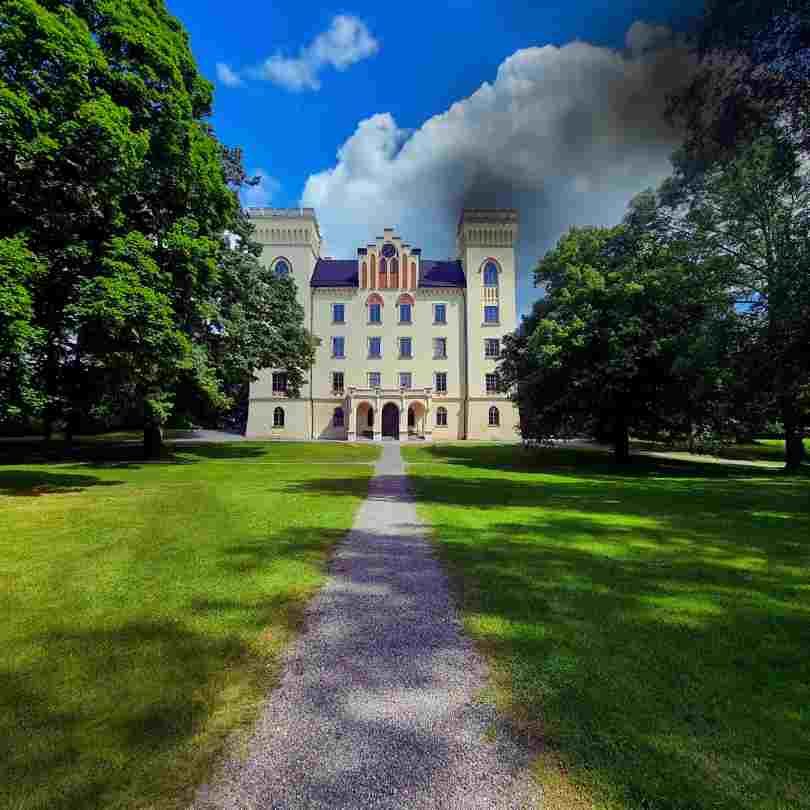
Where curses and ghosts still linger. In Vaxholm, amid the scenic landscape of the Stockholm archipelago, lies Bogesund Castle — a place said to bear curses and an eerie history.
Bogesund Castle — where curses and ghosts remain
In Vaxholm, among the scenic landscape of the Stockholm archipelago, stands Bogesund Castle — a place said to carry curses and an unsettling history. Doors here have slammed by themselves, screams have echoed in the night, and the silhouettes of departed noblewomen have been glimpsed in the banqueting halls.
Built in the 1640s by Count Per Brahe the Younger, the castle is surrounded by dark legends that continue to fascinate and frighten visitors today. Many who have been here describe strange events suggesting the castle is still inhabited — though not by the living.
The curse that shaped Bogesund's fate
When Bogesund Castle was completed in the 1640s, its creator Per Brahe warned against altering anything in the building. He claimed a curse rested on the place: if the castle were rebuilt, evil itself would take up residence. Despite this, Baron Nils von Höpken carried out extensive renovations during the 1860s. Almost immediately, tragedies followed one another. The architect died suddenly and unexpectedly, and von Höpken himself took his own life shortly afterwards. The curse, it seemed, had become real.
Encounters with the supernatural
The castle is known for its phenomena. Many visitors have felt an unexplained cold in the old corridors, heard steps in empty halls and seen doors open and close by themselves. Count Per Brahe's apparition is said to still walk the building. He has been seen in his old bedchamber and on the attic stairs, where several people have reported knocking and muffled footsteps.
One of the castle's most written-about ghosts is Carolina von Lantingshausen, whose unhappy life seems to bind her to the place. She appears most often in the banqueting hall, either seated by a window or in an armchair. Carolina's tragic story was made worse by her husband, Nils von Höpken, who locked the couple's children in the attic and in the cold cellar for long periods. The pain she experienced is believed to have left an indelible mark on the castle.
The attic and the maid's scream
A servant girl is said to have taken her own life in the attic by hanging, and her presence is still strongly felt. Many describe hearing her scream late at night, or feeling her sorrowful energy while climbing the creaking stairs.
The dark history of the attic and cellar adds to the sense that the castle is somehow alive. Visitors describe the feeling of being watched, shadows moving at the edge of vision, and a pressure on the chest that makes breathing difficult — a clear signal, some say, that not everyone is welcome here.
The children's whispers
Nils von Höpken's methods of raising children were cruel. He locked them away to "harden" them, leaving both psychological and physical scars. Their voices are said to still be heard in the corridors, sometimes as isolated whispers, sometimes as muffled cries from the most distant rooms.
A haunted heritage
Bogesund Castle is not only a place for unsettling experiences but also a window into another age. Its architecture, with crenellated towers and gothic windows, is an example of the medieval romanticism of the 1800s. The vaulted ceilings, banqueting halls and painted beams from the 1600s speak of its era of greatness. The ceiling paintings in the great hall, created by Berendt Vogel, are a masterpiece of grisaille technique.
Beyond its supernatural reputation, the castle sits within the Bogesundslandet nature reserve. The surrounding forest and old fields carry traces of earlier farming and settlement, making it a rewarding destination even for those not seeking contact with the beyond.
Decay and rebirth
Bogesund has not always stood in the proud condition it does today. During the 1900s the building fell into sad decay, a period when it became better known as a "ghost castle" than as a historic treasure. After standing abandoned for decades it was saved from destruction through a combination of state intervention and dedicated restoration.
After the castle was abandoned in 1906 by Baron Nils von Höpken, who settled permanently on Strandvägen in Stockholm, Bogesund was left to its fate. Valuable interiors disappeared through theft, and the lack of maintenance meant the building deteriorated quickly. Plaster fell from the façade, windows were boarded up, and dry rot spread through the old timber.
By the 1920s conditions at the castle had become a national scandal, with newspapers reporting on the neglect and what they called the nationally known catastrophe at Bogesund. Eventually the state passed a special law, Lex Bogesund, allowing the compulsory purchase of neglected property. In 1946 the castle and its extensive lands were expropriated by the Swedish state.
After the state took over, the castle was used for various purposes far from its former glory. A furniture store occupied the great halls, and the land was used for forestry research, including experiments with pesticides and even radioactive material. Signs warning of radiation only strengthened the site's reputation as strange and unsettling. Standing uninhabited and unloved, it became a symbol of both lost grandeur and human neglect.
It was not until 1993, when the National Property Board took over management, that extensive restoration began. The aim was to secure the castle's structural survival and restore parts of its former beauty. The first major phase began in 1996, when the façades were recreated in lime plaster in a pale ochre inspired by the colour scheme of the 1800s.
The restoration concluded with a formal reopening in 2012, attended by Princess Christina and her husband Tord Magnuson. Work has continued on a smaller scale since, focused on restoring interiors and preserving the historic ceiling paintings, the glazed winter garden and other unique details.
Visiting — if you dare
Today the castle offers guided tours presenting both its dark history and its architectural splendour. For the brave, ghost walks are also arranged, taking visitors into its most haunted rooms. Whether you are drawn here by the history, the architecture or the ghosts, Bogesund Castle is an experience unlike any other. Who knows — perhaps you will meet the White Lady, or hear the children's whispers as you explore.
FAQ
Where is Bogesund Castle located?
Bogesund Castle is in Stockholm, Sweden.
More haunted places in Stockholm
- Skogaholm Manor Skansen, Stockholm · Manor
- Avrättningsplats – Nacka Stockholm · Execution site
- Sångas avrättningsplats Stockholm · Execution site
- Avrättningsplatsen i Edsbro, Rimbo Stockholm · Execution site
- Avrättningsplats – Överjärna Stockholm · Execution site
- Ghost Hotel Gasten (Liseberg) Västra Götaland · Amusement park
- The Dog That Leapt into the Grave, Locknevi Småland · Cemetery
- The Evil One in the Smithy, Malmbäck Småland · Haunted site
Accounts are drawn from local folklore and visitor reports.
Image: spokkartan.se