Forladte steder
Sverige · Abandoned site
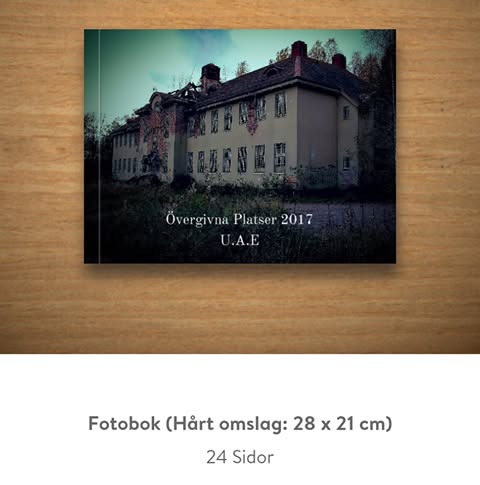
Urban Exploring. At udforske forladte steder, eller "urban exploration" (urbex), er en populær aktivitet for de eventyrlige — men det er vigtigt at vide, hvad der gælder i Sverige for at holde sig inden for lovens grænser.
Urban exploring in Sweden
Exploring abandoned places — urban exploration, or urbex — is a popular pursuit for the adventurous. Sweden has its share of empty sanatoriums, shuttered factories and forest cottages left exactly as they were. Before setting out, it is worth knowing what the law actually allows.
What Swedish law says about abandoned buildings
Under Swedish law you may not enter private or cordoned-off land without permission. Even when a building is abandoned, in most cases it still has an owner, and entering the site counts as unlawful intrusion. The owner can report it to the police, and explorers caught on site can be fined. If damage is caused to the building, the explorer can be prosecuted for criminal damage. Access can be restricted even when the building is owned by the state or a municipality.
Allemansrätten — the Swedish right of public access that lets anyone roam the countryside — applies only to natural land, not to buildings or farmyards. Abandoned buildings are therefore not covered by it. This surprises many visitors to Sweden, who assume the right of access extends to anything unlocked.
Staying on the right side of the law
Respect signs and barriers. If a building is marked "Tillträde förbjudet" — no entry — or is fenced off, going in is illegal.
Ask for permission. If a particular building interests you, try contacting the owner. Some property owners will allow a visit if you ask politely and have good intentions.
Take precautions. Abandoned buildings are often genuinely dangerous, with a risk of collapse, rotten floors and falling debris. Enter carefully, and preferably not alone.
Leave no trace. One of the central principles of urban exploration is "take only pictures, leave only footprints". Respect the place: break nothing and move nothing.
An explorer's account
"This was a discovery I will never forget. I had been given a tip that somewhere far out in the forest there was an old cottage, untouched since the 1940s. Of course I had to go and look, even if I did not really believe it would be untouched. But I set off hoping to find something genuinely unique.
After several hours of trudging through thick terrain with only a vague sketch map to follow, I began to doubt it. Then, almost exactly as darkness settled over the trees, I caught sight of a small silhouette between the trunks. It was a cottage — entirely covered in moss and hidden behind tall spruces that seemed to have stood there forever. My first impression was that it felt magical, like finding a portal into another time.
When I opened the door it creaked loudly and a musty, almost acrid smell filled the air, but the cottage was dry and — incredibly — as good as untouched. On a small table lay a dusty coffee cup beside a yellowed newspaper from 1942. I could hardly believe my eyes. It felt as though someone had simply stepped out to fetch firewood and never come back. Everything was as it had once been.
On the walls hung small handwritten notes and sketches, nailed up a little unevenly with old rusted nails. It was almost a diary, as if someone had left fragments of their life in here. I cannot help wondering who lived here, and why they left it all behind. It really did feel as though the person who lived here did so alone. And why simply disappear?
In the bedroom I found a made-up iron bed under a layer of dust barely visible in the torchlight. It was eerie, almost as though the cottage were waiting for someone to come home. I swear it felt as if I were not alone — as if someone were keeping an eye on me.
I left with a strange feeling. Some kind of reverence, I think. That cottage was more than a house. It was a time capsule, a place that had survived everything and was simply waiting to be found. And now I had found it."
Oplysningerne bygger på lokal folketro og vidneberetninger.
Image: Svenska Spökkartan (Facebook)